
ISL Pilot Grant Spotlight: Investigating the Effects of Microplastics on Human Neural Stem Cell Aging
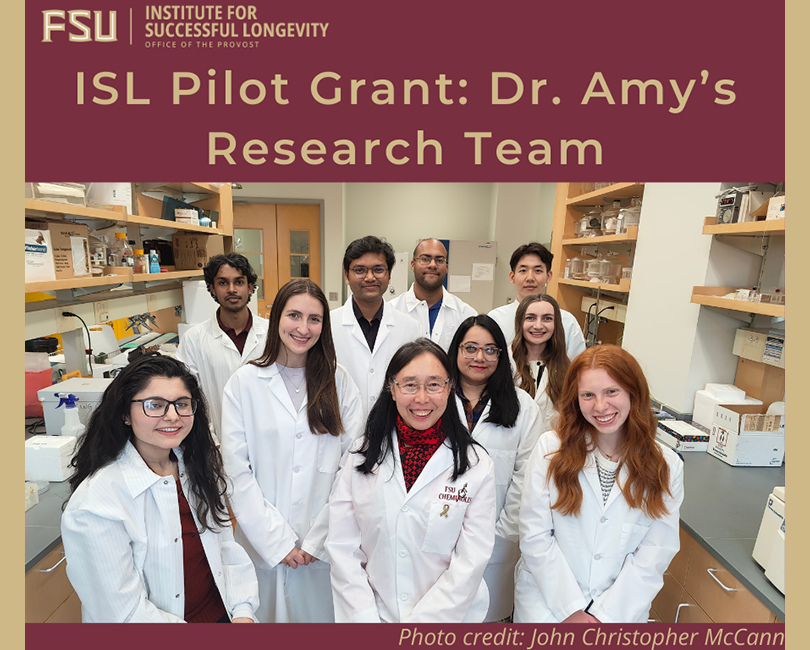
The Institute for Successful Longevity (ISL) is pleased to highlight the successful completion of an ISL Pilot Grant led by Dr. Qing-Xiang “Amy” Sang, Professor in the Department of Chemistry and Biochemistry at Florida State University. The project, titled “Effects of Microplastics on Human Neural Stem Cell Aging,” addresses an emerging and critical environmental health concern with direct implications for brain aging and longevity.
Microplastics—tiny plastic particles now widely detected in the environment—have been increasingly found in animal and human tissues, including the brain. Despite growing evidence of their accumulation, little was previously known about how microplastics may affect human neural stem cells, which play a vital role in brain maintenance, repair, and aging. Dr. Sang’s project was designed to fill this important knowledge gap by examining the cellular and molecular consequences of microplastic exposure from an aging perspective.
Using human neural stem/progenitor cell models, the research team including graduate students Faiza Mahmud, Drishty B. Sarker, Yu “Harry” Xue, and an undergraduate student Jonathan Jocelyn systematically evaluated how exposure to common microplastics influences cell morphology, growth, and viability. The study further investigated microplastic-induced oxidative stress and its impact on mitochondrial health, an essential regulator of cellular aging. In addition, the project examined hallmark features of cellular aging, including senescence-associated changes and alterations in intercellular messenger production that may influence neural communication and tissue function.
The findings from this pilot project provide compelling evidence that microplastic exposure can disrupt mitochondrial function and accelerate aging-related cellular processes in neural cells. These results suggest that environmental microplastics may represent an underrecognized risk factor for brain aging and neurodegenerative vulnerability, underscoring the need for further investigation at the intersection of environmental exposure, cellular aging, and brain health.
This ISL-supported project has been highly productive, resulting in two major peer-reviewed publications that disseminate the findings to the broader scientific community. Additional original research manuscripts are under preparation.
Mahmud F, Sarker DB, Jocelyn JA, Sang QA. Molecular and Cellular Effects of Microplastics and Nanoplastics: Focus on Inflammation and Senescence. Cells. 2024 Oct 29;13(21). doi: 10.3390/cells13211788. Review. PubMed PMID: 39513895; PubMed Central PMCID: PMC11545702. https://pubmed.ncbi.nlm.nih.gov/39513895/
Kiran S, Thilanka U, Xue Y, Sang QA. Polystyrene Micro- and Nanoplastic Exposure Triggers an Activation and Stress Response in Human Astrocytes. Int J Mol Sci. 2025 Nov 21;26(23). doi: 10.3390/ijms262311273. PubMed PMID: 41373431; PubMed Central PMCID: PMC12692081. https://pubmed.ncbi.nlm.nih.gov/41373431/
The success of this work also lays a strong foundation for applying for external grant funding from FL-DOH, NIH and NSF, including expanded investigations using more complex brain models to better understand long-term and translational implications.
ISL congratulates Dr. Sang and her research team on the successful completion of this impactful pilot grant and for advancing our understanding of environmental factors that may influence healthy brain aging and longevity.
Photo (left to right): Sonia Kiran, Uvindu Thilanka Dasili Wickramasinghe, Marian Gonzalez, Drishty Badhon Sarker, Qing-Xiang “Amy” Sang, Jonathan Jocelyn, Faiza Mahmud, Fiona Dininger, Yu “Harry” Xue, and Sophia Martinez.
Photo courtesy of John Christopher McCann.